

What is Busted Haiku?
My Muse invaded my consciousness one day to urge me to develop a new sub-genre of haiku poetry. This resulted in what I call busted haiku, the subject of this website, and of the book by the same name.
Japanese haiku are typically 3 line poems, with syllable pattern 5-7-5 in the English format. They are primarily oriented toward nature, often with a seasonal twist. The writer and the reader are supposed to be left out, leaving only the images from the words. Senryu are similar, but allow such things as humor, anger, psychology, and wit. Senryu are sometimes called failed haiku. Here is an on-line magazine of Failed Haiku. And here is antantantantant, a blog of almost-busted haiku.
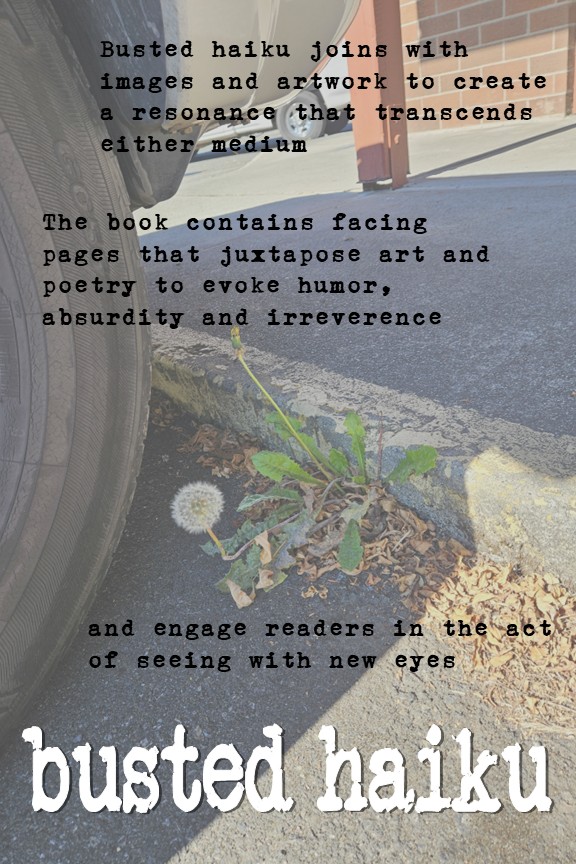
Beyond failed haiku is busted haiku. This is rogue poetry, feral haiku, poems that bite their own tails and gnaw holes in the walls of reality. At times minimalist, at times absurd, busted haiku is poetry after the rules have gone home.
Here is perhaps the most famous of the ancient Japanese haiku:
       The old pond--
       a frog jumps in,
       sound of water

                   --Matsuo Basho

This is one of many possible translations, since Japanese writing is vertical, and uses mora ("on"), which are sonic units, instead of syllables. In this haiku, Basho starts with a serene nature image, the old pond. Then an active image, the frog jumping in. The resulting "sound of water" invites the reader to contemplate the interrelation of stillness, movement, and the collision of items in the natural world. With "sound," Basho encourages the reader to participate by introducing an element that requires a listener!

This is my favorite modern haiku:

        beam by beam
       the old barn taken down
       to sky

                     --Peter Newton

I generally frown on analyzing poetry, with a few exceptions--here is one, a remarkable look at this haiku, introducing various aspects, that will, IMHO, expand anyone's appreciation of the genre: Negative space with a link to  commentary by John Stevenson.

These are some of my senryu, which have been published in Failed Haiku:

       stubbed toe--
       Alexa learns new words

       used enlightenment
       as-is
       needs work

       her smile
       a billion years in the making

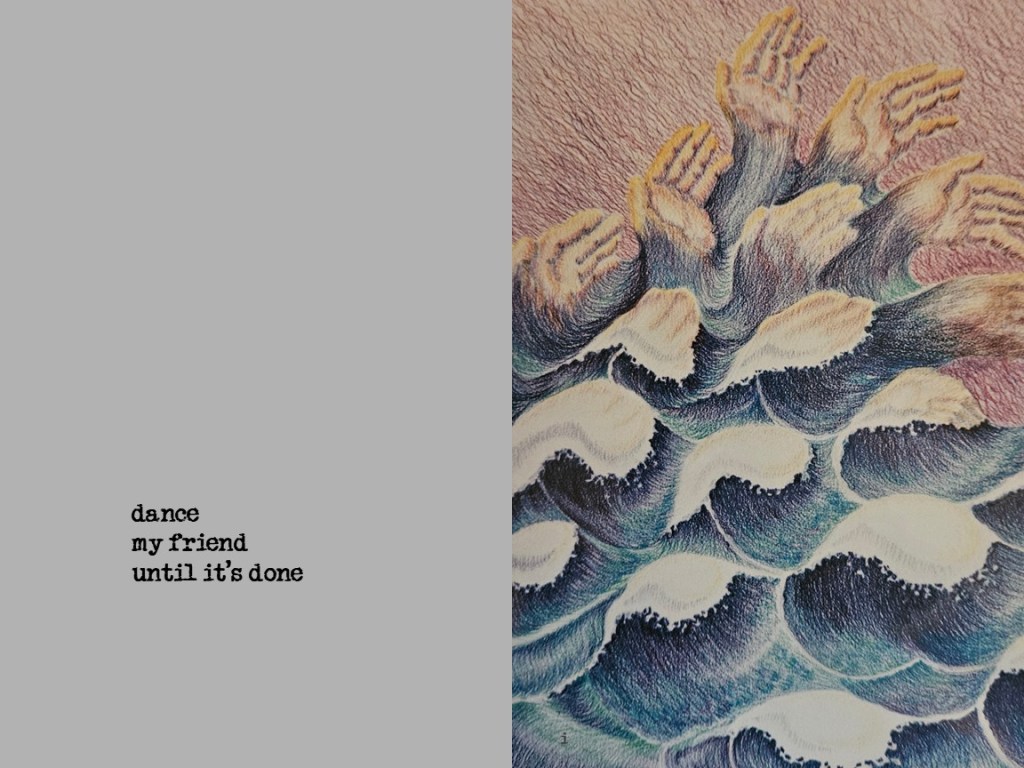
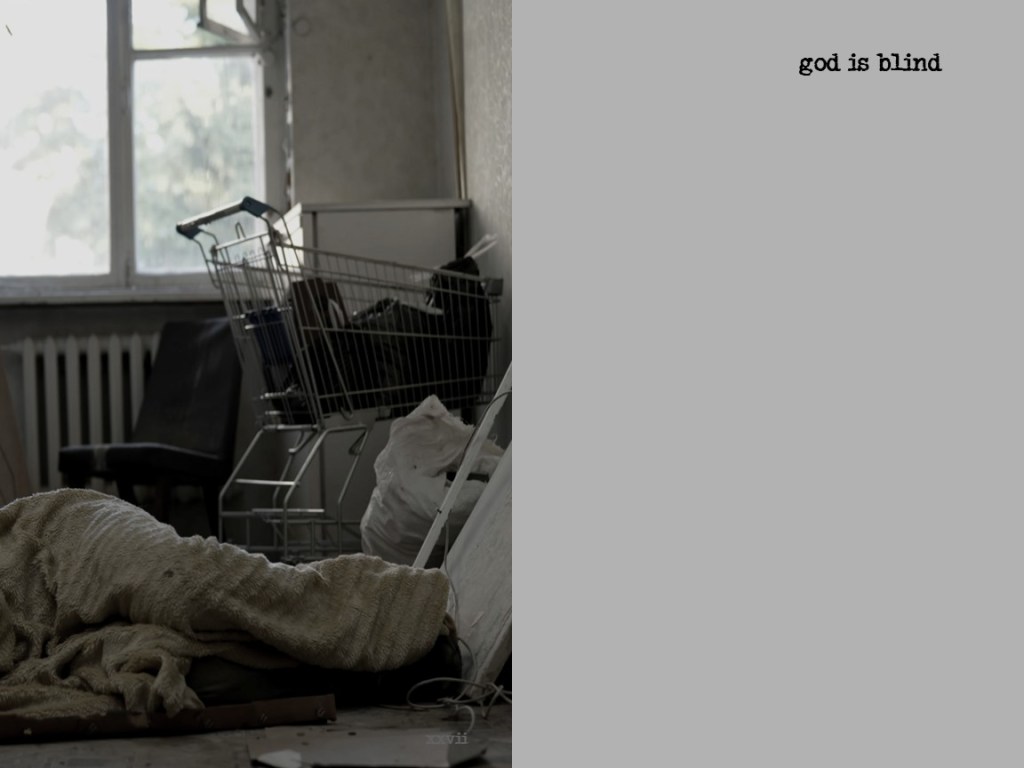
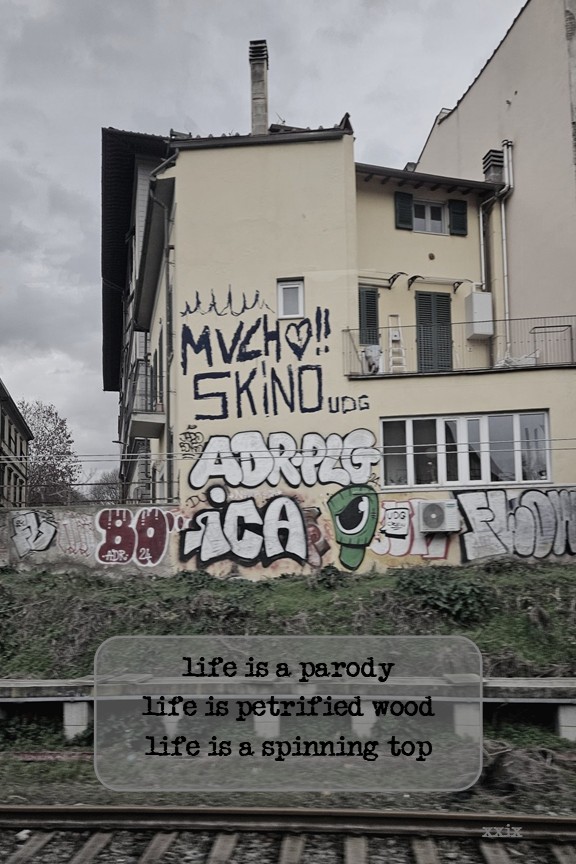
Obviously different from standard haiku. These qualify as well for my definition of busted haiku, but they should be combined with graphic art to be fully resonant. The art need not be directly related to the poem, yet there should be a subtle echo between the two.


Here is one of the busted haiku from my book:

       rite of passage--
       feral cat seeks new stoop

And here I'll make another exception to my no-analyzing praxis. A feral cat, associated with a stoop, implies that the cat visits someone's door stoop, possibly for a bit of food left there occasionally. The word "new" suggests that something happened to the old stoop. Perhaps the owner died, no longer leaving food. This would give double meaning to the first line--the cat goes through a rite of passage with the ordeal of finding a new stoop, while "passage" could refer to the house owner's death.

This poem still lacks the consonance that a photo or work of art could provide. Here is how the piece appears in the book:

I leave it to the reader to supply the vibrance to tie the two--or three--elements together into a busted haiku.
 busted haiku